

Modern Slavery Reporting: What You Need to Know

Resources headerBoyce Graphic

CATEGORY

AUTHOR

DATE Published

Modern slavery reporting: What you need to know

Lily Cochrane, Boyce Sustainability Manager

At a glance:

  • The Modern Slavery Act 2018 requires businesses with $100m+ in annual revenue to publish an annual Modern Slavery Statement  
  • Statements detail the business’ assessment of supply chain risks, actions taken, effectiveness and governance approval 
  • Agriculture is high-risk (migrant/seasonal labour, labour hire, remote locations) and taking action protects reputation, strengthens supply chains and prepares for tighter rules. 

What is modern slavery?  

Many assume slavery is a thing of the past. However, modern slavery is a very real and growing global issue, including here in Australia. It refers to extreme forms of exploitation where people are unable to refuse or leave work due to threats, coercion, deception, or abuse of power. 

Modern slavery includes: 

  • Forced labour 
  • Human trafficking 
  • Debt bondage 
  • Servitude 
  • Forced marriage 
  • Child labour 

Despite Australia’s strong labour laws, an estimated 41,000 people are currently trapped in modern slavery, more than double the number reported in 2018. Globally, the situation is even more alarming, with around 50 million people worldwide living in modern slavery in 2021, including 27.6 million in forced labour. Many of these individuals are hidden in the supply chains of everyday goods. Australia alone imports over US$17.4 billion worth of goods each year that are at risk of being produced using forced labour. 

Legal reporting requirements in Australia 

To address this issue, the Australian Government introduced the Modern Slavery Act 2018 (Cth), which came into effect on 1 January 2019. The Act requires entities operating in Australia with annual consolidated revenue of at least $100 million to publish an annual Modern Slavery Statement outlining how they are identifying and addressing modern slavery risks in their operations and supply chains. 

Each statement must address the following six mandatory criteria: 

  1. Entity details: Identity, structure, operations, and supply chains.  
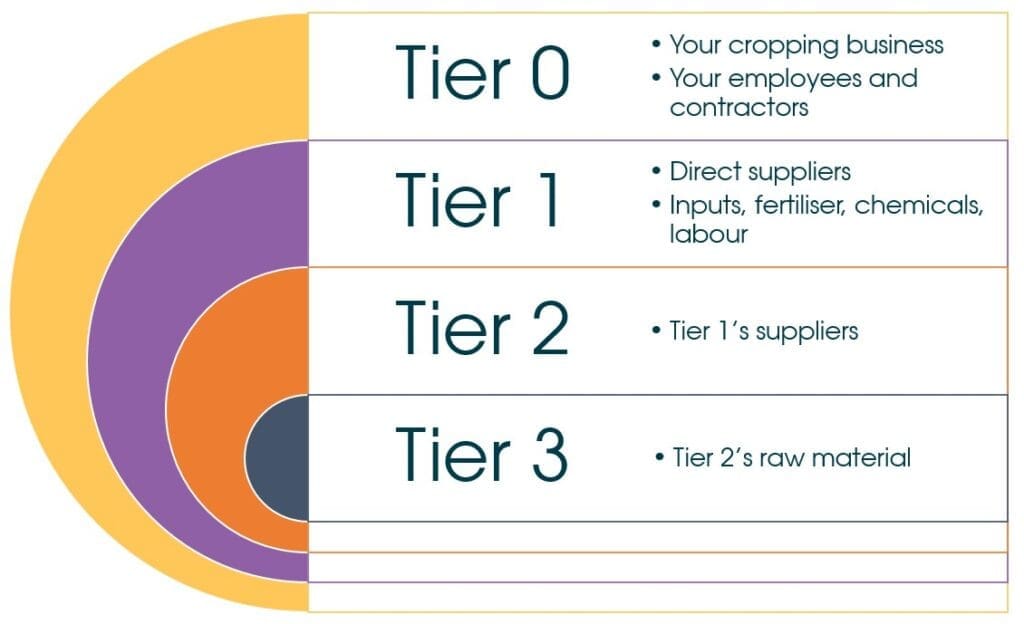
  1. Risk assessment:  Break your supply chains into ‘tiers’ based on suppliers’ risk and proximity and assess where modern slavery risks may exist. For example, particular regions, products, or business partners that could be high-risk for forced labour or trafficking 
  1. Actions taken: Steps to assess and address risks, including due diligence, policies, training, and remediation.  
  1. Effectiveness assessment: How the business measures the impact of its actions ensure anti-slavery in their business and supply chain.  
  1. Consultation: How the entity consulted with subsidiaries or controlled entities.  
  1. Approval: Confirmation that the statement was approved by the governing body (e.g. the Board of Directors) and signed by a responsible executive (such as a director or CEO). 

Statements must be submitted within six months of the end of the financial year and are published on the Australian Government’s Modern Slavery Statements Register. 

Currently, there are no financial penalties for non-compliance. However, the government may publicly identify non-compliant entities, exposing them to reputational risk. A 2023 review of the Act has recommended introducing penalties and lowering the reporting threshold, changes that may be implemented soon. 

An example of how a cropping business might assess their business and supply chain Tiers: 
Why the agricultural industry is high-risk 

Agriculture is recognised as one of the industry’s most vulnerable to modern slavery risks. Key risk factors include: 

  • Reliance on low-skilled, migrant, and seasonal labour: Workers on temporary visas may be dependent on employers for housing or visa sponsorship, increasing their vulnerability to exploitation. 
  • Use of labour hire contractors: Outsourcing during peak seasons can obscure visibility over recruitment and working conditions. 
  • Remote and isolated worksites:  Rural locations can limit access to support services and oversight, making it easier for exploitative practices to go undetected. 

By taking proactive steps, agribusinesses can not only meet legal obligations but also protect their workforce, reputation, and long-term sustainability.  

 
Business benefits of addressing modern slavery  

Modern slavery is not just a human rights issue; it’s a material business risk. Proactively addressing it can deliver tangible benefits: 

  • Protect your brand and reputation: Avoid the reputational fallout of being linked to exploitative practices.  
  • Manage supply chain vulnerabilities: Identify and mitigate risks that could disrupt operations or expose your business to legal and ethical scrutiny.  
  • Meet stakeholder expectations: Investors, customers, and business partners increasingly demand transparency and ethical sourcing.  
  • Enhance market access: Demonstrating compliance and ethical practices can open doors to new markets, contracts, and certifications.  

Build trust and loyalty: Ethical practices foster stronger relationships with employees, suppliers, and communities.  

  • Prepare for future regulation: Stay ahead of tightening legal requirements and avoid last-minute compliance costs. 

Next steps 

If you think these requirements may apply to your business, or you’d like to understand your modern slavery risk exposure, get in touch. We can help you determine whether you need to report, map your operations and supply chain, identify key risk areas, and develop a practical, compliant Modern Slavery Statement and action plan. 

Partnering with generations to thrive.

Liability Limited by a scheme approved under Professional Standards Legislation.
Boyce acknowledges the Traditional Custodians of the Country on which we work and pays respect to Elders both past and present.